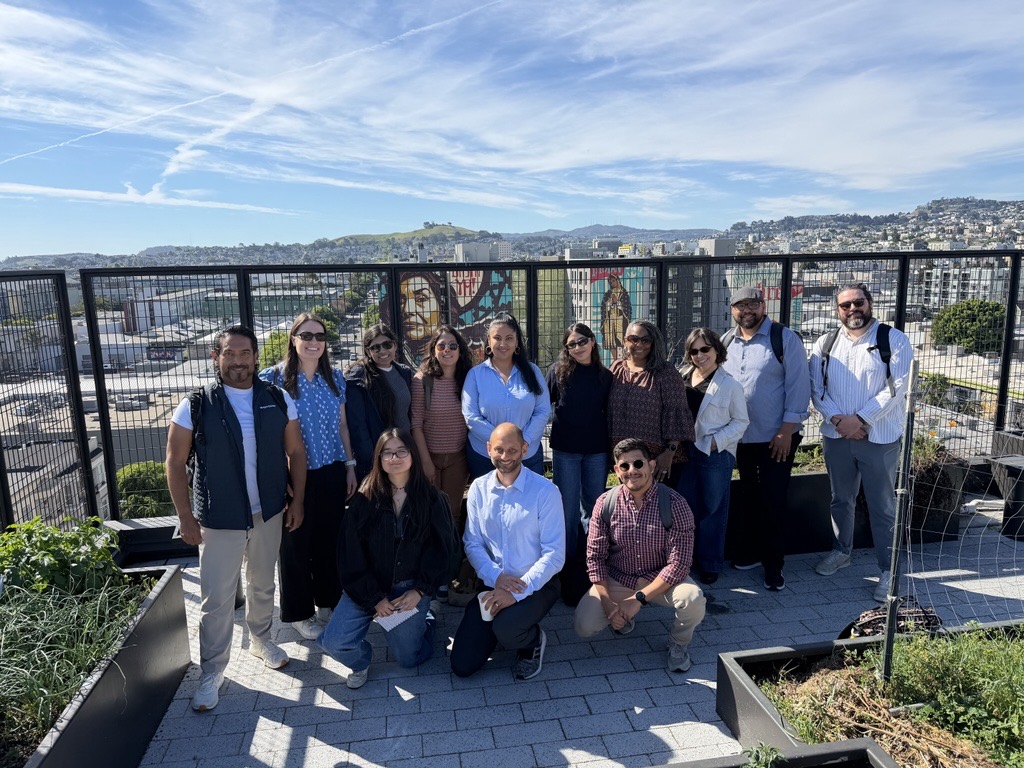

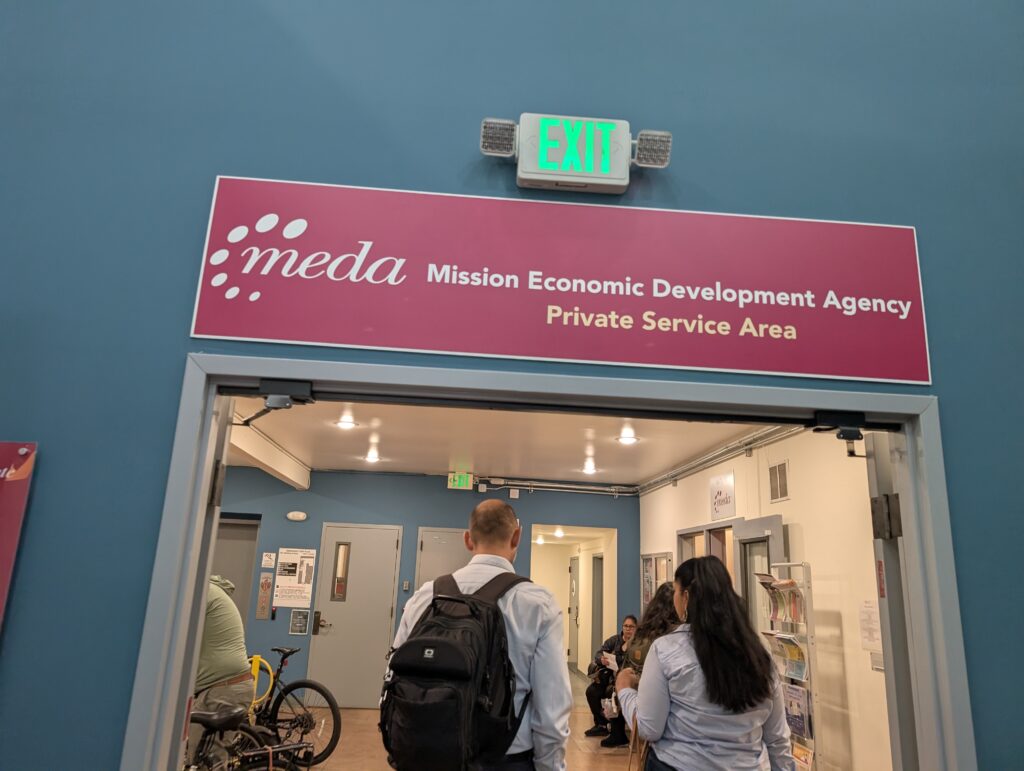
In March 2026, the Planning, Advocacy, and Civic Engagement (PACE) and Housing team at Canal Alliance spent a fruitful two days at an in-person technical assistance training at the Mission Economic Development Agency (MEDA), a place-based affordable housing developer in and for the Mission District of San Francisco. Sponsored by the National Association for Latino Community Asset Builders (NALCAB) as grantees of their Equitable Neighborhood Development (END) grant program, PACE and housing sat alongside three other nationwide community-based organizations to learn about affordable housing development, small-business preservation, and fundraising strategies. Our visit was brief but powerful and will serve as a case study for how conducting affordable housing development can look like in the Canal.
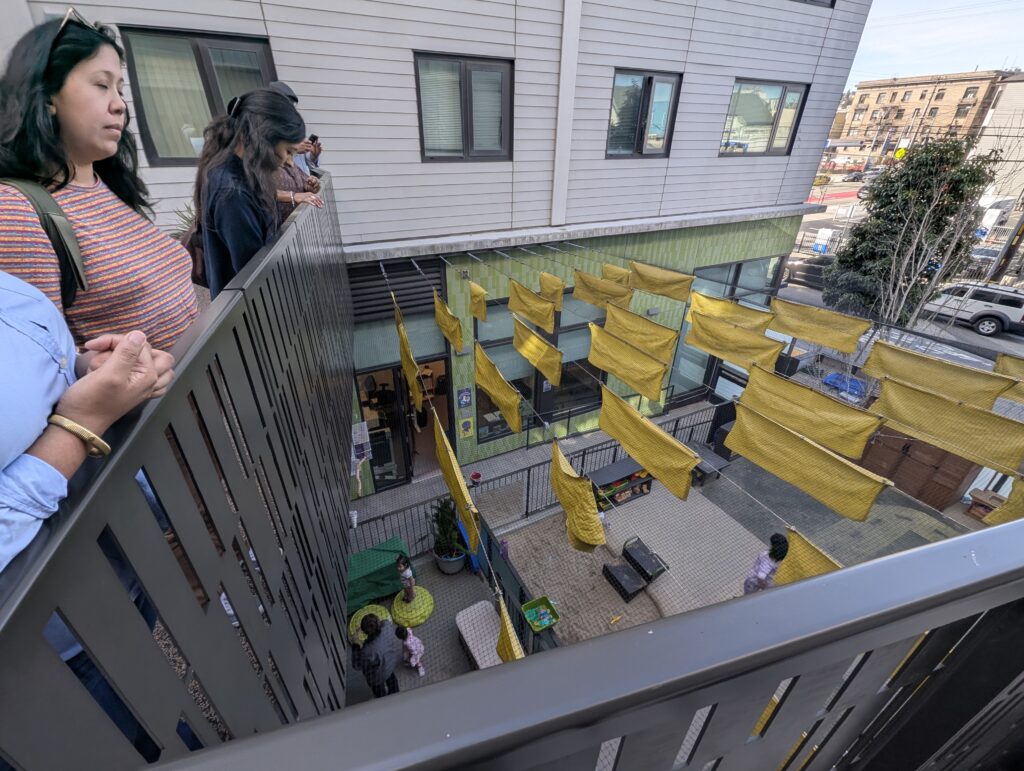
One of the highlights of the training was learning how MEDA leverages city programs to develop and preserve housing and long-term small businesses in the Mission. At our first site, we visited Casa Adelante, 2828 16th St, an 8-story and 143-unit building with a childcare center on the ground floor, a community garden on the roof, and sweeping views of the city throughout. On the first floor, the building provides direct services, indoor/outdoor community spaces, and a direct connection to their in-house property manager. The holistic, community-rooted living experience at Casa Adelante, 2828 16th St., proves that our aspirations of what affordable housing should look like can be a reality.
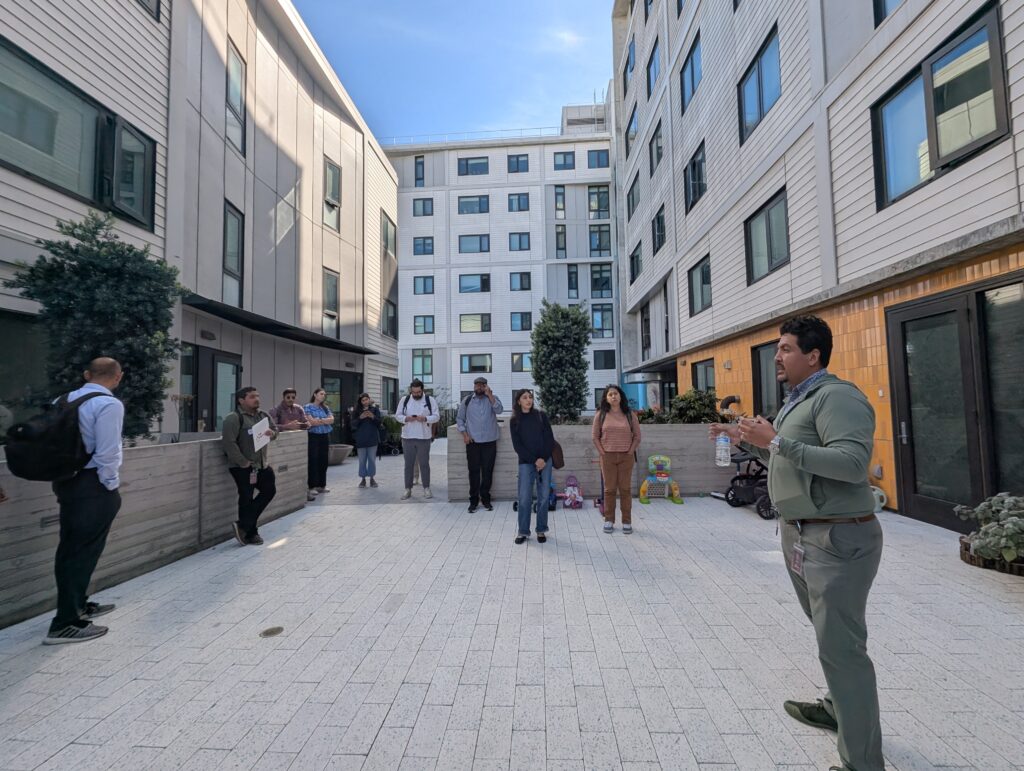
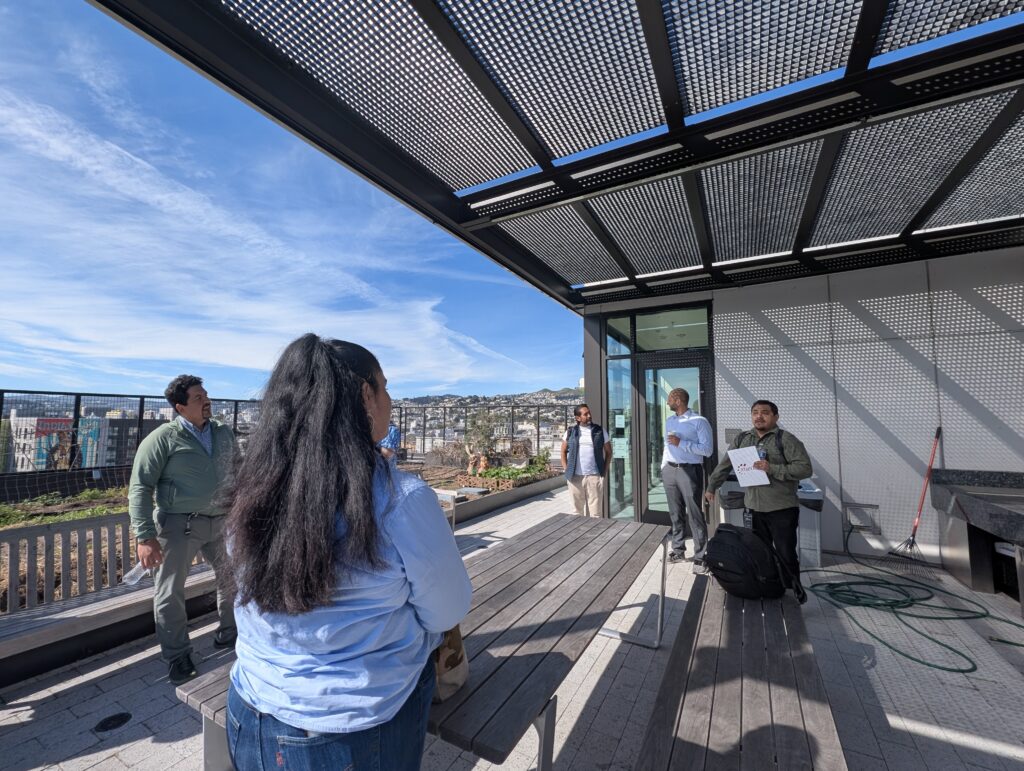
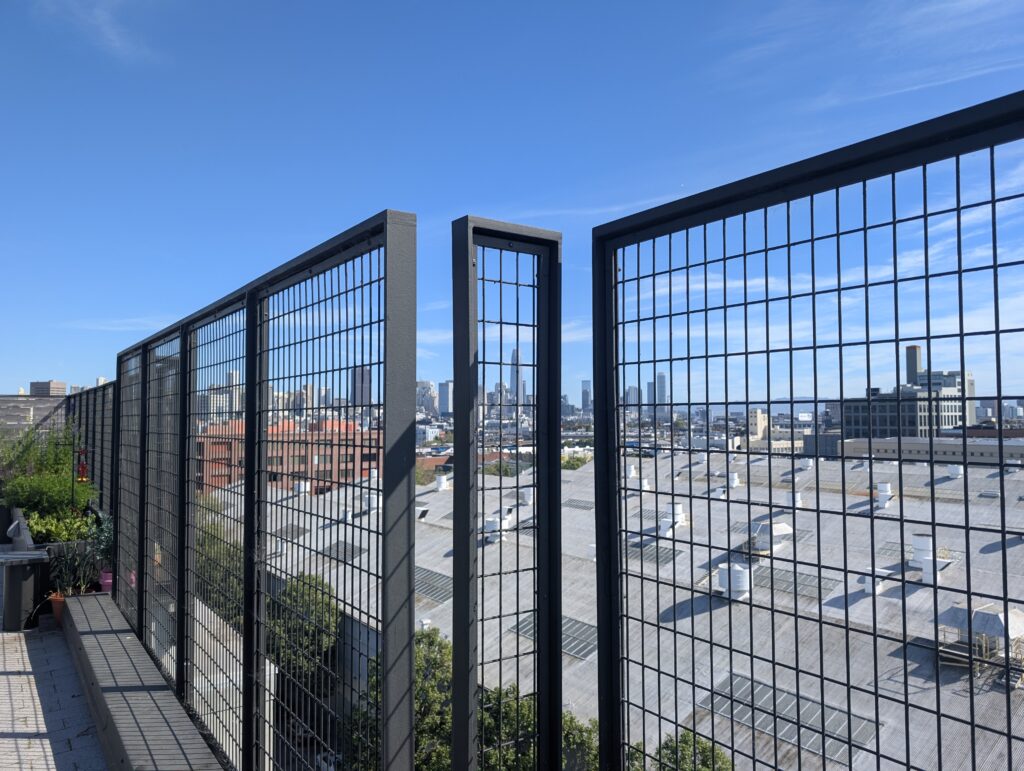
Afterwards, we visited 2960 16th St., formerly Mission Hunan Restaurant, which is slated to become permanent supportive housing for low-income families and individuals experiencing homelessness. Known as “La Maravilla,” the development was originally proposed as luxury housing but after sparking outrage, the project transitioned into being the neighborhood’s largest affordable housing project.
Interestingly, La Maravilla faced backlash also. With 9 stories and 450 units planned, residents worried that the height would deprive children at the adjacent Marshall Elementary School of the sun. However, after MEDA explained the benefits of the building posed, residents stepped back and gave their approval, underscoring the importance of listening to, understanding, and facilitating an open conversation with the community.
Shortly thereafter, we observed some of MEDA’s small-site acquisitions. “Small sites” is a city-designated program to rehabilitate apartments of less than 25 units where tenants are at risk of displacement. In the City of San Francisco, there are close to 60 small sites—over half of which are owned by MEDA.
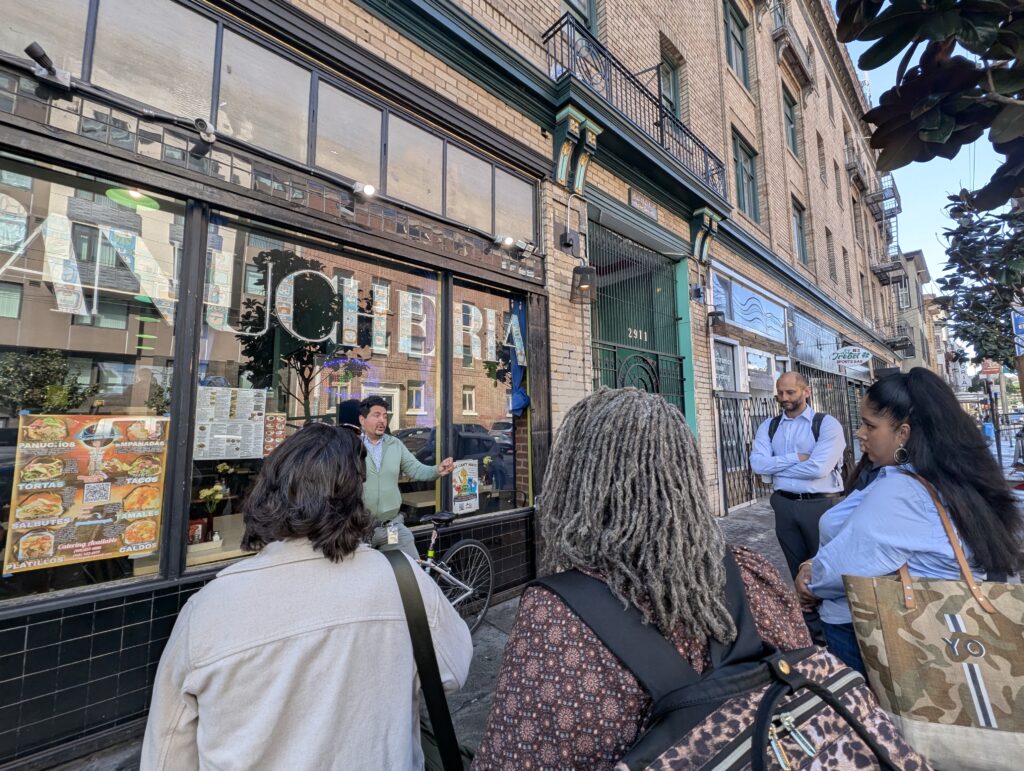
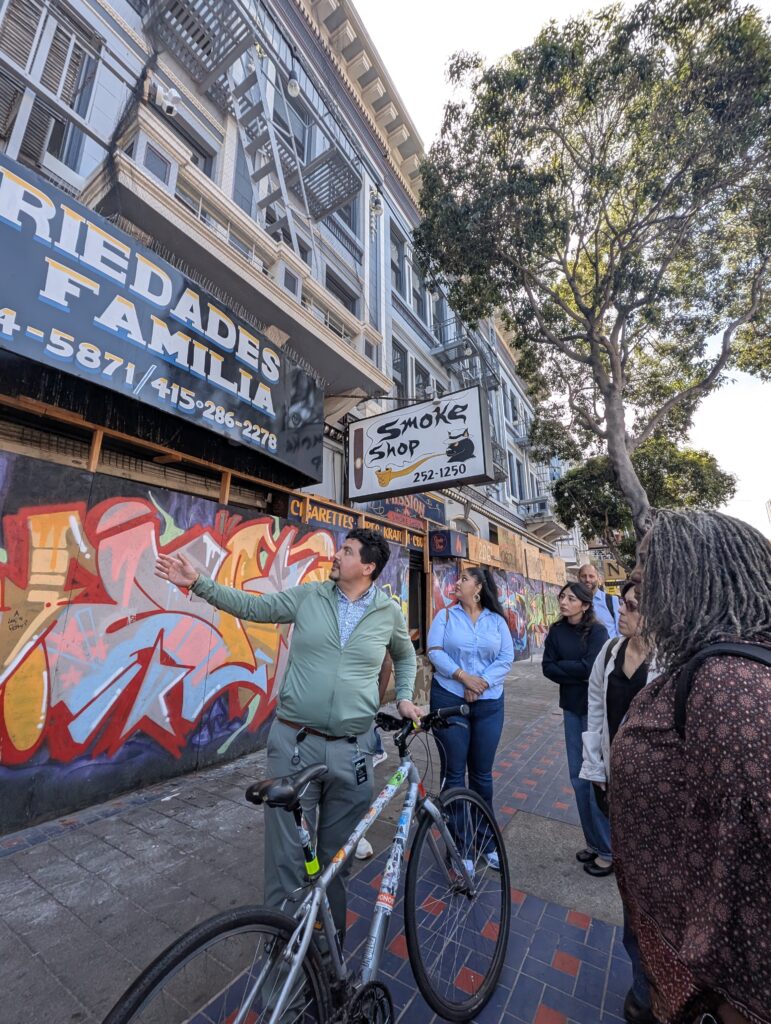
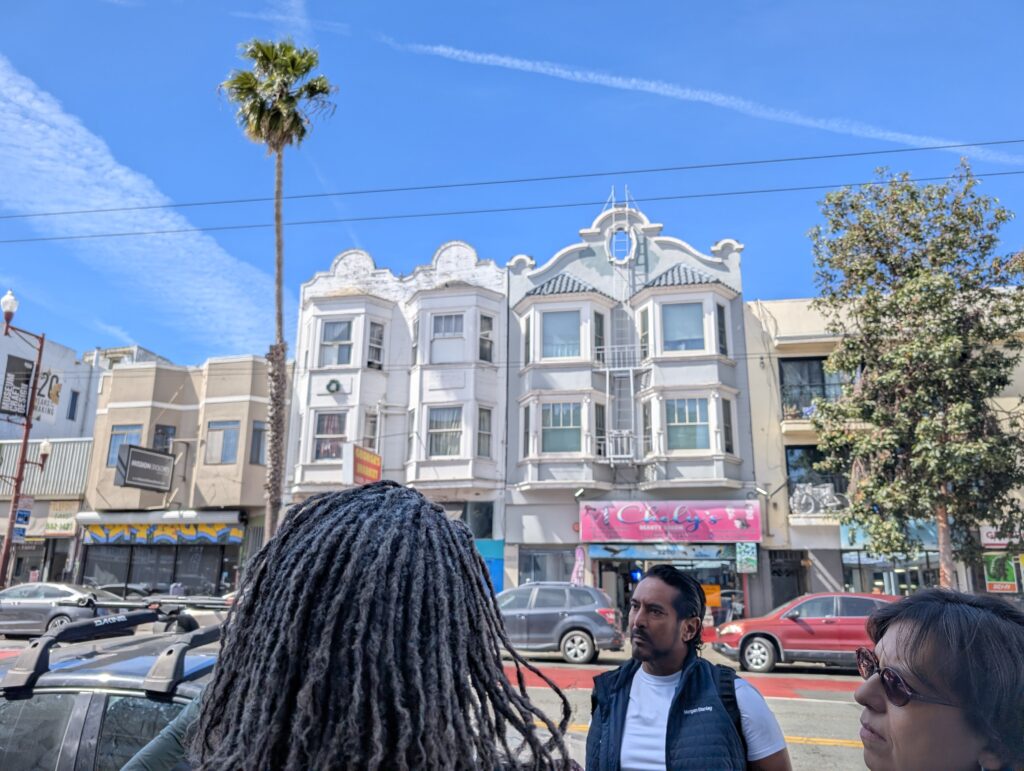
A few notable examples of MEDA’s small sites include 40 Sycamore St and 2217 Mission St. At 40 Sycamore St, a former garage was turned into a 300 sq ft micro-dwelling, creating affordable housing in the heart of one of San Francisco’s most culturally vibrant neighborhoods.
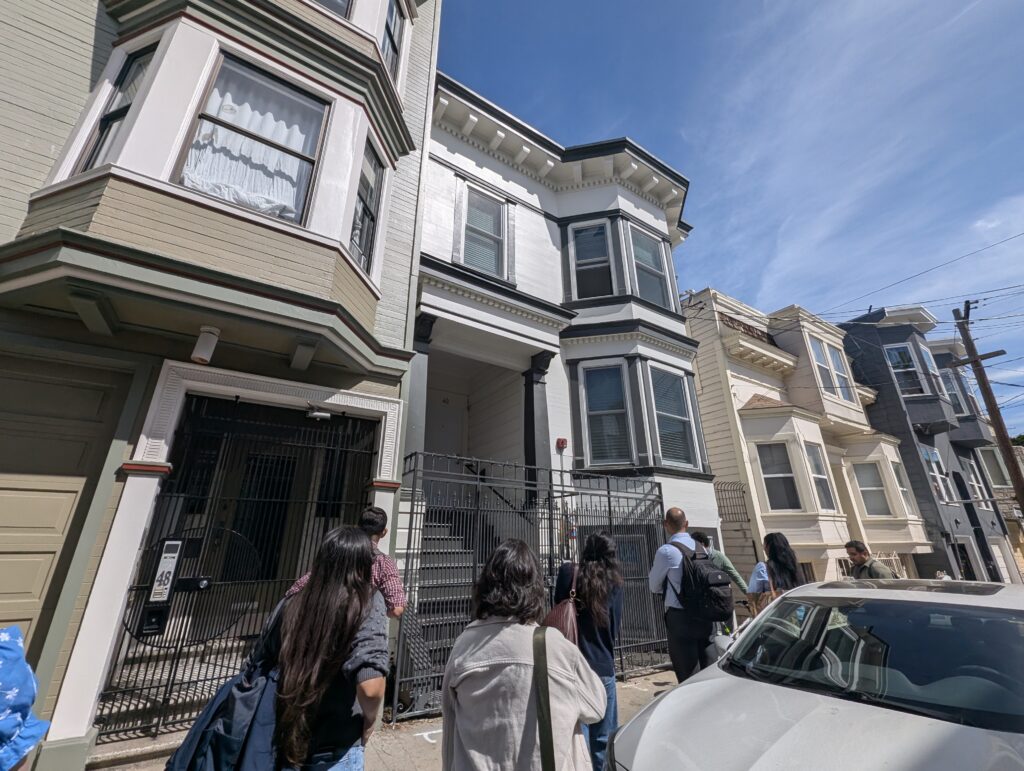
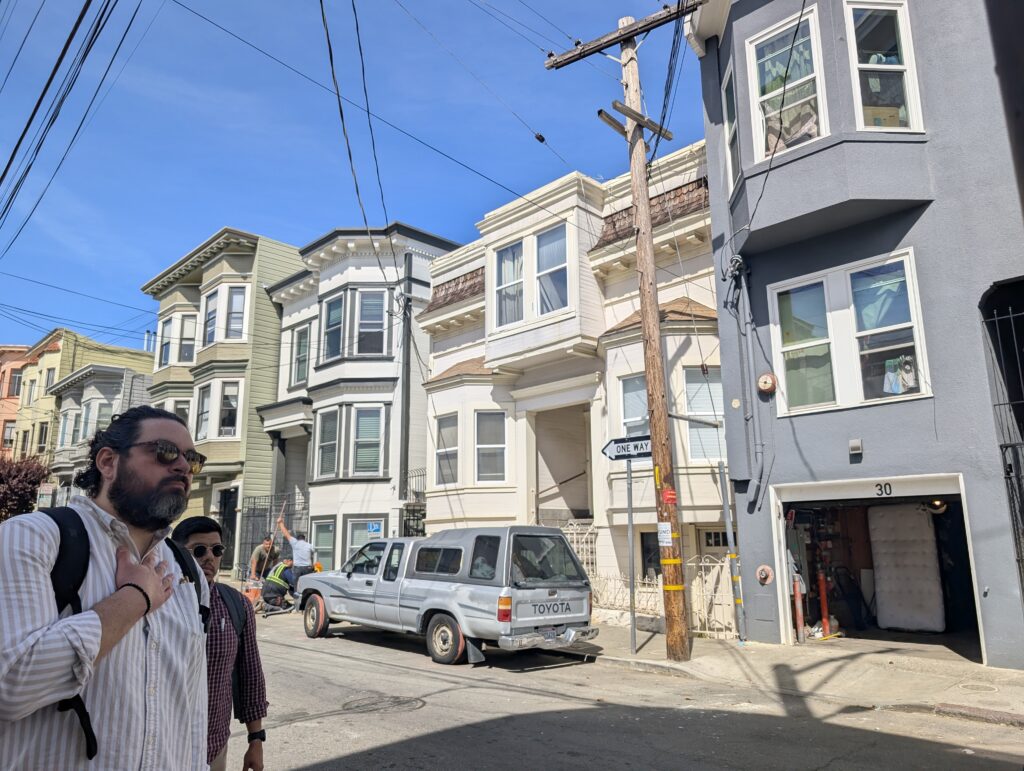
At 2217 Mission St, the two-story building houses Homies Organizing the Mission to Empower Youth (HOMEY), a non-profit dedicated to serving at-risk Mission youth. These small sites exemplify how affordable housing can take on many different shapes and be multi-functional.
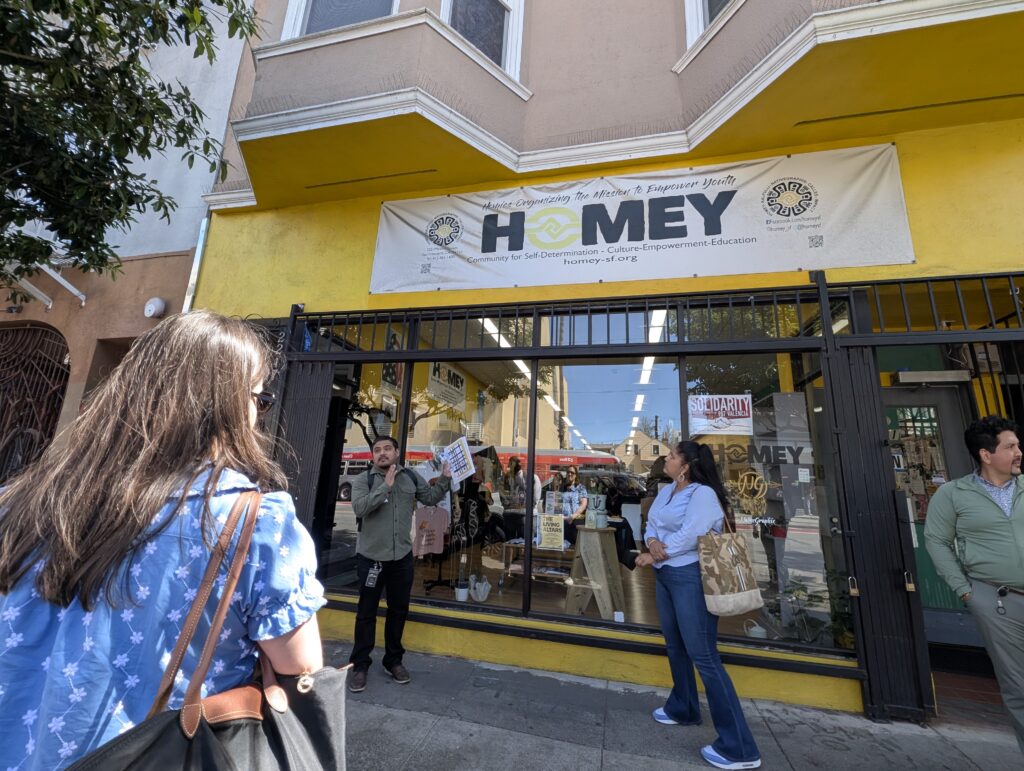
Throughout touring MEDA’s small sites, Juan Diego and Santiago shared a few pointers for first-time organizations interested in pursuing affordable housing development. These quick but valuable tips will serve as a framework for moving our work forward and may of use for other organizations as well. These tips include:
- Aim to retrofit existing units rather than build new ones. Renovating an existing building rather than constructing an entirely new one will save you a significant amount of money.
- Have a minimum of eight to ten funding sources. Affordable housing development is not a cheap endeavor, so it is important to diversify income sources.
- Attempt to partner with a local community development corporation, or CDC. This ensures developer fees are kept and spent locally.
In addition to small sites and supportive housing development, MEDA also supports micro-businesses via Fondo Adelante and El Mercadito. Per their website, “Fondo Adelante offers low-interest loans and free business consulting to entrepreneurs across the nine Bay Area counties—regardless of credit history or immigration status,” whereas El Mercadito provides a temporary but physical storefront for microbusinesses on the first floor of Plaza Adelante, MEDA’s HQ.
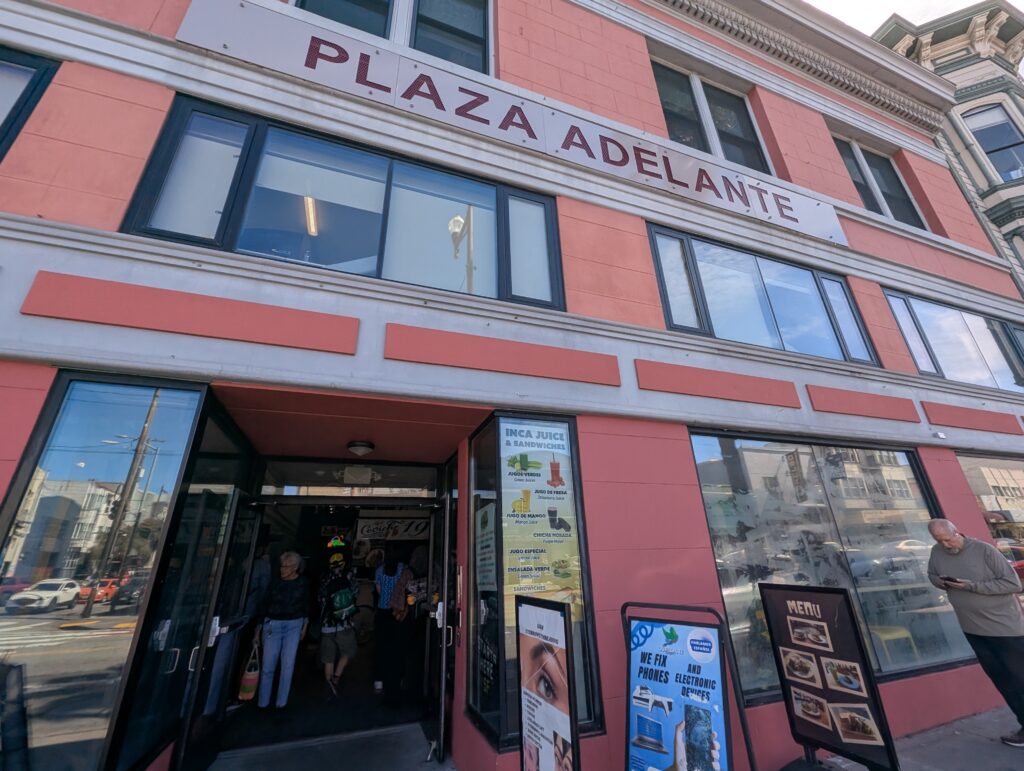
Together, MEDA offers a comprehensive approach to removing historic barriers low-income and immigrant Latinos often face and platforming a majority-Latino owned and serving businesses right in the heart of Mission. These programs heavily resonated with our team and will serve as a reminder as to what is possible for our own community here in the Canal.
To wrap up, a tour of the Mission would not be complete without pointing out the glaring issue of gentrification. To highlight the differences, Juan Diego and Santiago walked us Clarion Alley, an art-filled passageway that connects bustling Mission St and Valencia St.
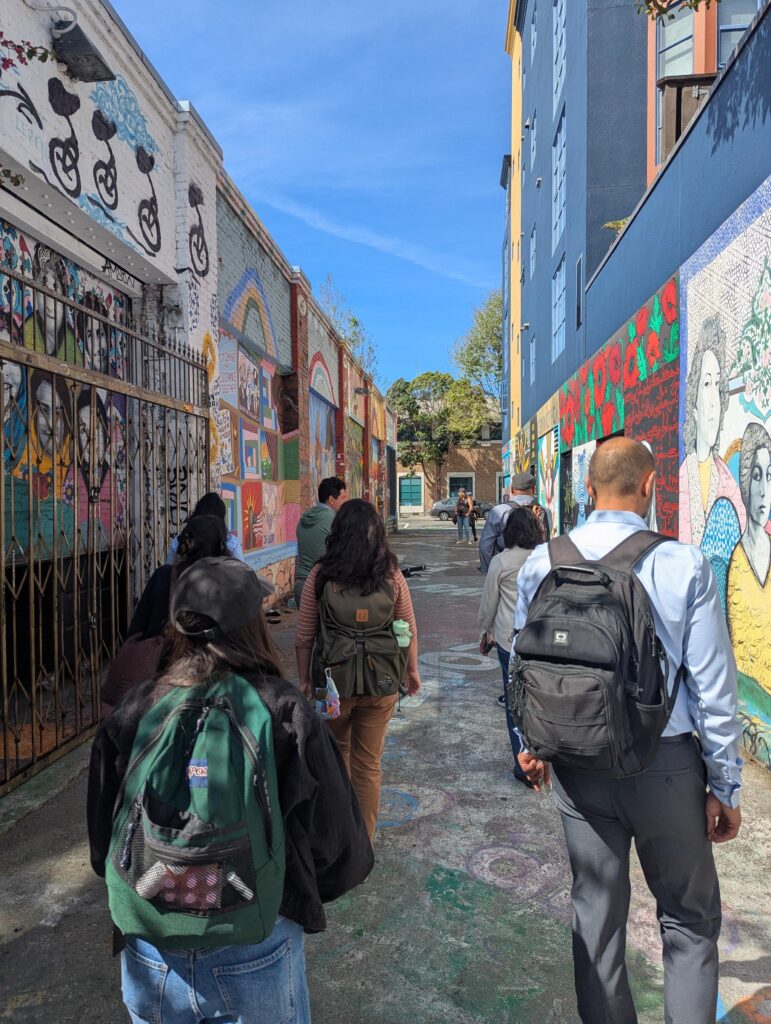
Through a mere 30-second walk, the contrast was striking. On Mission St, is vibrancy—a colorful array of businesses, homes, and people. On Valencia St, is a largely monochromatic color scheme beiges, browns, and greys, luxury housing, and boutiques prospective businesses describe as “boom-and-bust.”
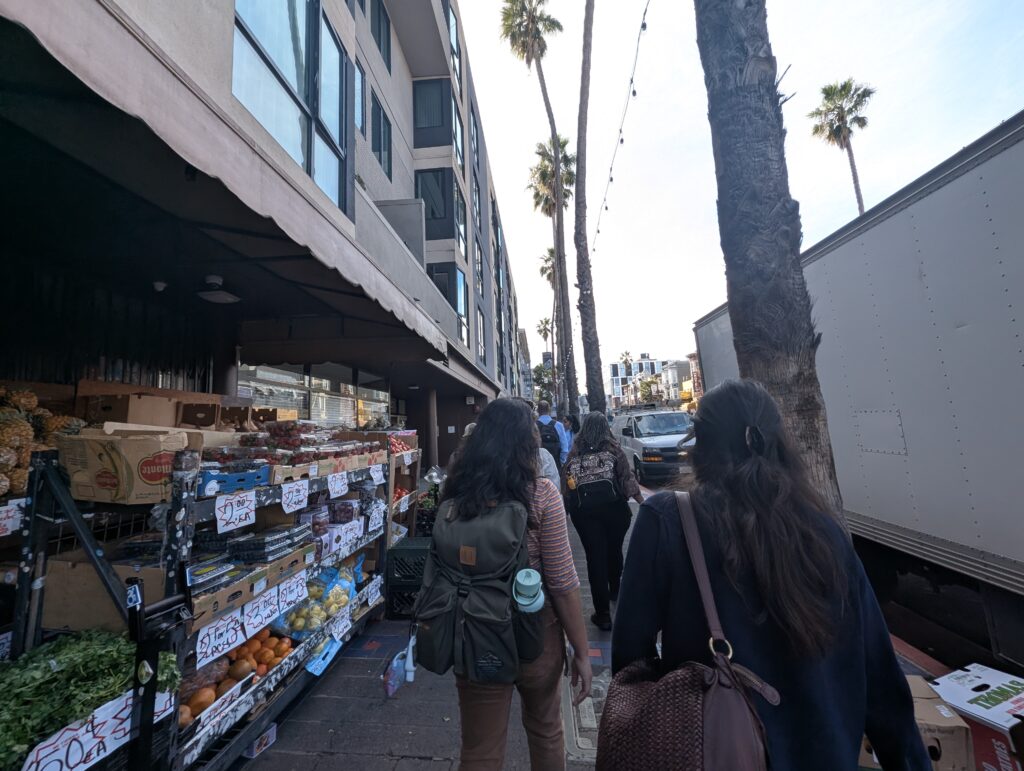
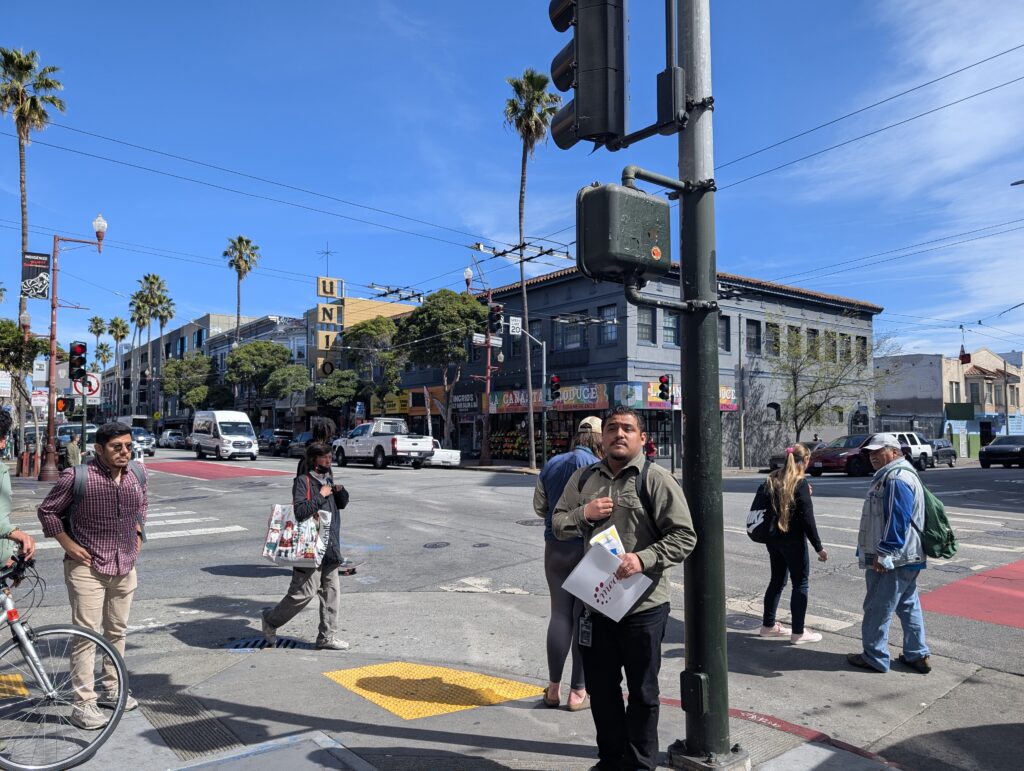
As a result, the slogan “No Valencia on Mission St” is popular cry amongst community members fighting to preserve the character of the neighborhoods most important street.
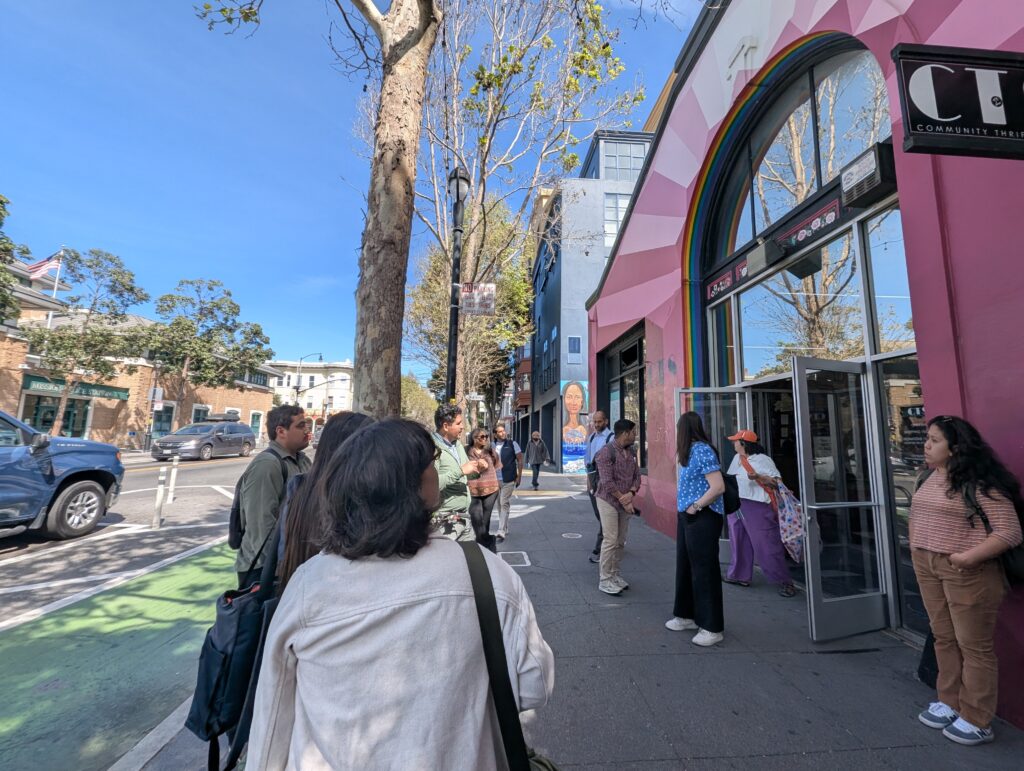
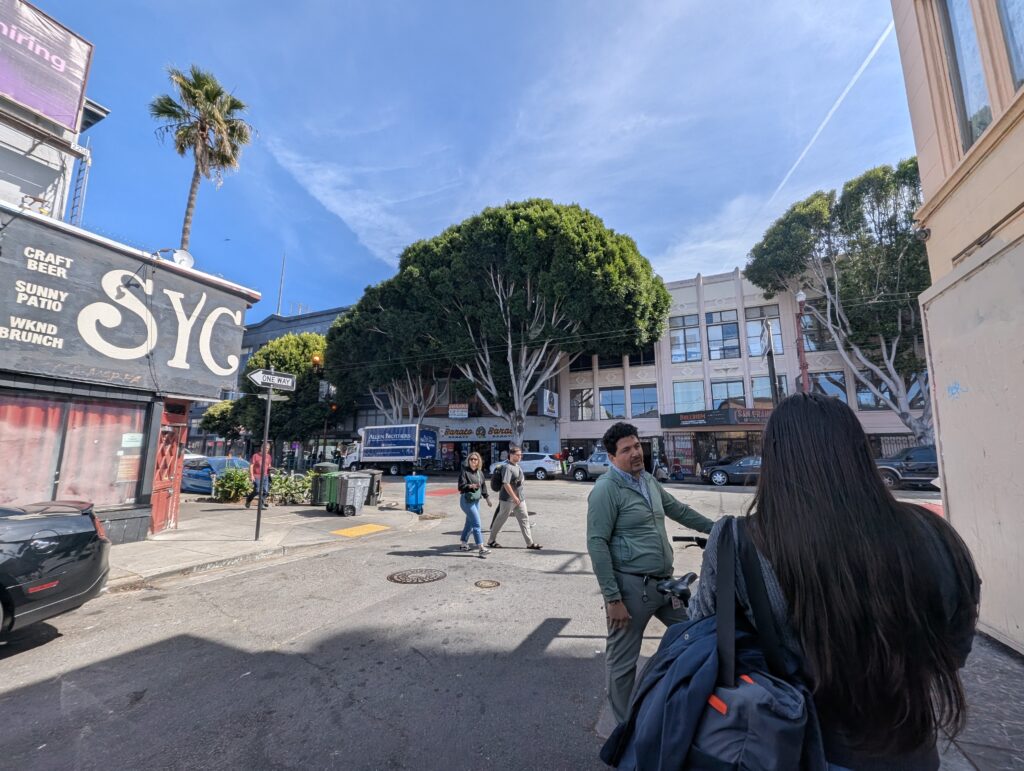
MEDA certainly does its part in this fight. As part of its mission to remove barriers and uplift Latino residents and entrepreneurs, MEDA has helped a handful of the 72 Mission-based businesses apply for the city’s Legacy Business Registry. Benefits include receiving financial incentives for long-term businesses, helping keep residents and local businesses in the neighborhood.
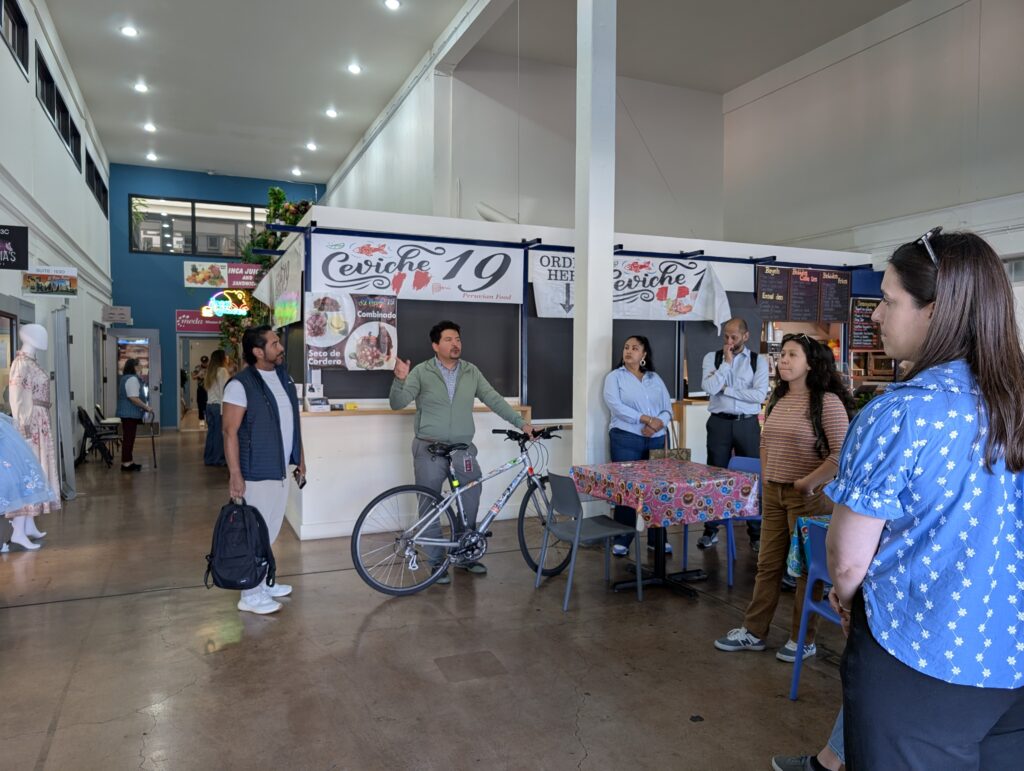
Thank you to Juan Diego “JD” Castro, the National Partnerships Director, and Santiago Martinez Xonthe, the National Partnerships Program Manager at MEDA, for being incredible hosts and tour guides.
To Luis Granados, CEO, Jose Garcia, Chief Real Estate Officer, Rajni Banthia, VP of Evaluation, Michelle Reiss-Top, Technology and Data Systems Manager, Peter Papadopoulos, Senior Policy Analyst, Jessica Rubio Rincon, Policy Director, and Sandra Collins, VP of Development & Communications, for taking the time to speak with us and share their invaluable insights.
This visit would not have been possible without the support of NALCAB and their Equitable Neighborhood Development grant program. Thank you to Aaron Villarreal, Neighborhood Development Sr. Program Manager, Marcella Reyes, Program Manager, and Colin Powell, Sr. Director of Programs, for coming up from Texas and helping facilitate our learning. We look forward to getting to work and bringing our new learnings to the Canal!